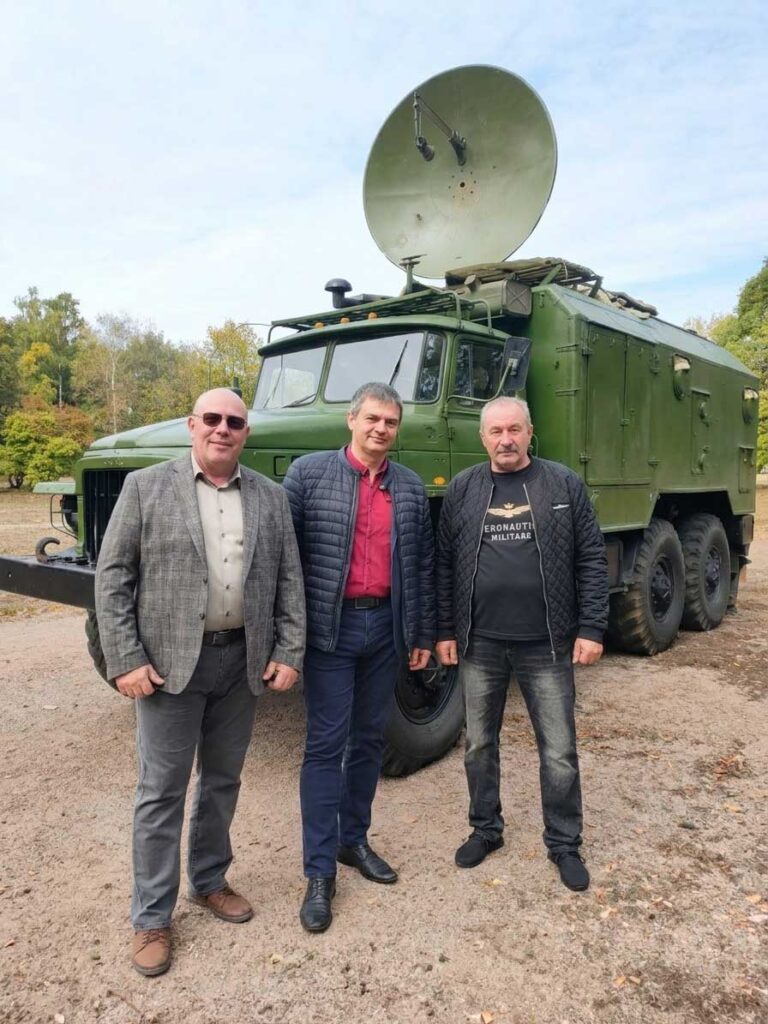

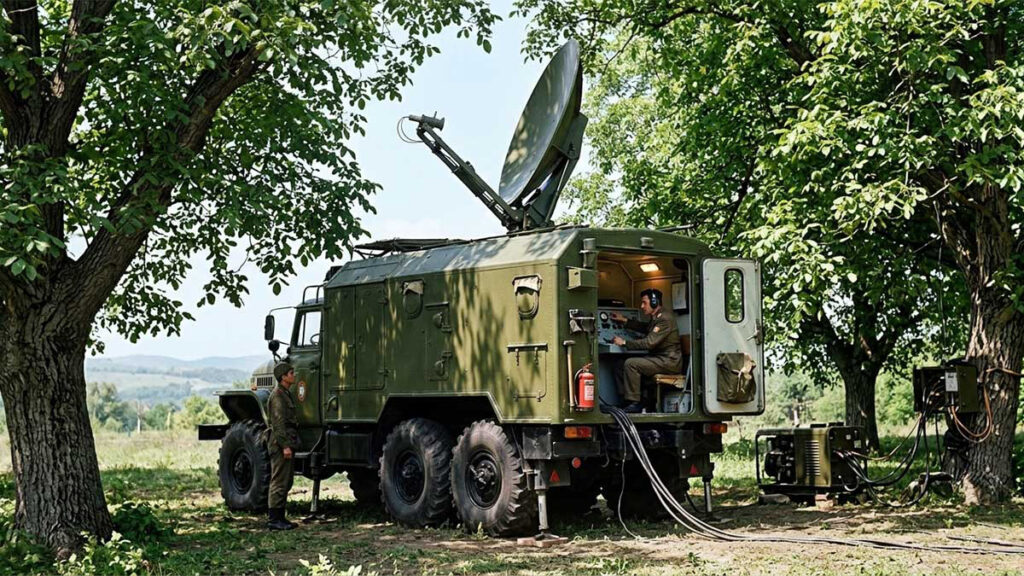
In a walnut orchard 39 years ago: The beginning of the space age in the Bulgarian Academy of Sciences army
- Place: Walnut orchard near the village of Botevo, Tundzha municipality, Yambol region.
- Time: May 24, 1987, exactly 39 years ago.
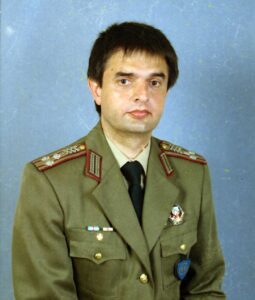
- Acting person: me – a rookie officer… lieutenant engineer.
The sun is fighting the dense walnut forest. The birds are welcoming the approaching summer with their songs. The air is fresh. It is lunchtime, but I don’t feel any hunger.
I am sitting on the steps of the space station. The equipment is humming softly behind me. I feel a little sad… My classmates are meeting today at the “Mother Bulgaria” monument in Veliko Tarnovo to celebrate the 5th anniversary of the graduation of the Second High School “Vasil Drumev”… Where will they continue tonight? We have always been very close and together everywhere, and today I am not there… Will they understand me? After all, it was not by chance that I did not go with them.
At that time, I could neither boast nor even explain why I was not at the meeting. As a colleague says, simply “if the service requires it and does not contradict the statutes…”.
Sad, but happy! Why? Because we had just established
THE FIRST official space connection in the history of the Bulgarian Army.
The exact term is “satellite”, but for some reason “space” gained greater popularity among us.
Our correspondent was the station of the Navy (VMF), with Chief Lieutenant Commander Emil Popov and Deputy Midshipman Pavel Pavlov (LZ4PV).
My crew was also somewhat thoughtful. These guys were Senior Sergeant Vasil Yordanov Vassilev (LZ3WW – now a reserve sergeant), Senior Sergeant Valentin Stanchev Tsanov (also a reserve), Private Emil Spasov Stoyanov, Private Toni Denchev Iliev and Private Stefan Iliev Stefanov. In just a few months, this crew had become like a well-oiled machine – a real “platoon of excellent guys”. Truly excellent fighters and men with whom we became friends and we can rely on each other.
I was warned that the brigade commander was approaching, along with other of my superiors. I prepared to meet them.
The order that went down in history
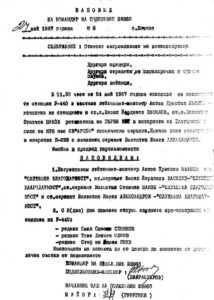
They were coming to greet us. The brigade chief of staff read out an order:
“… at 11:50 on May 24, 1987, the crew of the R-440 space station consisting of… established for the FIRST TIME in the history of the Armed Forces…”
I admit, I didn’t listen to the text
I didn’t even hear what the awards were. For me, the important thing was that everything had gone exactly as it should have, that we had succeeded. I was proud of my crew. The credit was shared.
And it wasn’t just my crew’s. I felt immense gratitude to:
- The then Chief of Staff of the battalion – Captain Nikola Lazarov (LZ5NL – now a colonel from the reserve);
- The head of the radio department – Colonel Yanko Nikov (now in a better world);
- His assistant for radio and space communications – Colonel Dimitar Asenov Dimitrov (from the reserve);
- The head of the administration at the time – General Kirov.
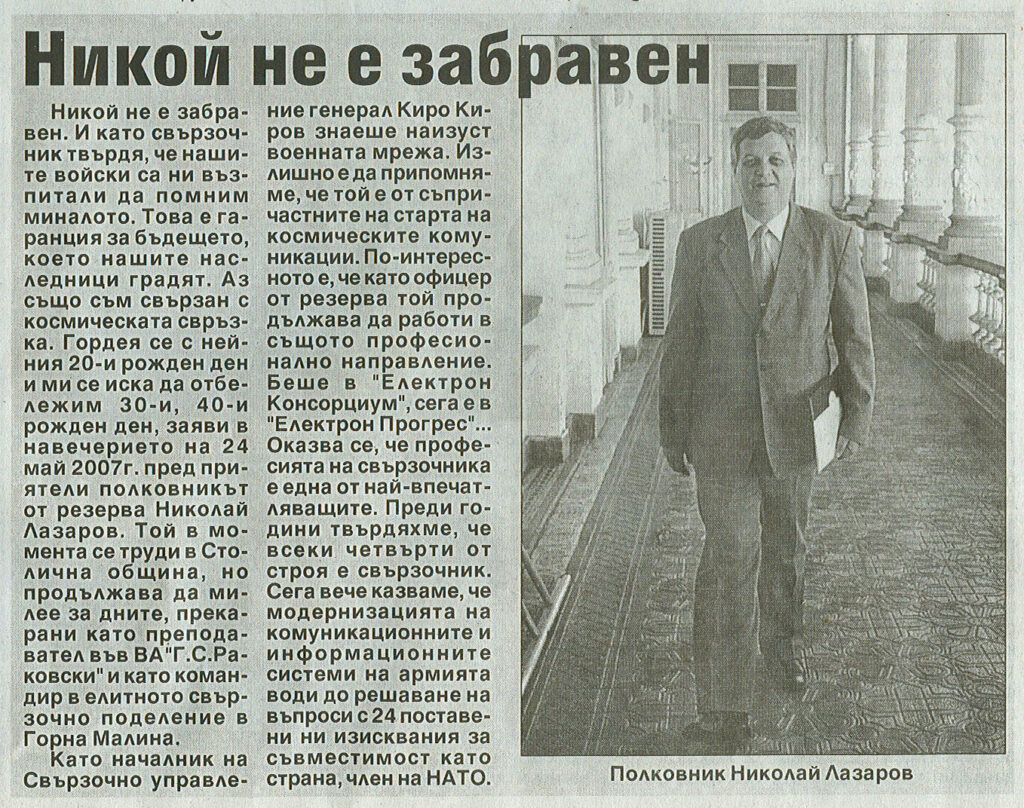
The credit was equally due to our correspondents from the Navy, as well as to the people thanks to whom the channels were encrypted and put into use – Senior Sergeant Valentin Alexandrov, Lieutenant Tihomir Todorov and the then head of the department in the CIS management at the General Staff (later Brigadier General) Boyko Simitchiev. The fact that our connection was the first does not in any way diminish the merit of all the other “cosmonauts” (as we were called then) from the Land Forces in Nova Zagora, Suhodol, Plovdiv and Sliven – this was an entire national system for space communication, ensuring communication in the country and with the Supreme Command of the Armed Forces of the Republic of Bulgaria.
I am afraid of missing someone, so I will not list them all, but each of them is in my heart.
These were not just officers and sergeants from the “analog era”. These were the few servicemen at that time who were implementing and using digital communications – people with an innate sense of new technologies.
How the “stiffened” system was broken through
With my current experience (already as a former colonel, although still a teenager at heart), I appreciate what it cost my superiors to ensure this success. The army was an extremely conservative structure at the time, and it was almost absurd to break through with something new. That was the case for many years of my service.
I will never forget the words of one of my superiors when I “made up my mind” to go to a course on space communications (after all, I was one of the first to experience such a technique in person, which I initially understood nothing about):
“Hey, lieutenant, where are you going? At least twenty people in the USSR have already taken such a course! Grab your books and study, the station has documentation…”
Fortunately, there were also superiors who knew that without training there is no implementation. They managed to organize a course here, in Bulgaria, on their own. And the documentation (Soviet production) was fortunately detailed enough.
Where did we start from
To understand what level I was starting from, I will tell you how I found out what position I was assigned to. We were about ten officers, just assigned to the unit. We gathered at the entrance to the Ministry of Defense on Aksakov Street. The personnel officer came and told us to move a little to the side so as not to disturb the people passing by. We went to the then well-known confectionery “Kristal”.
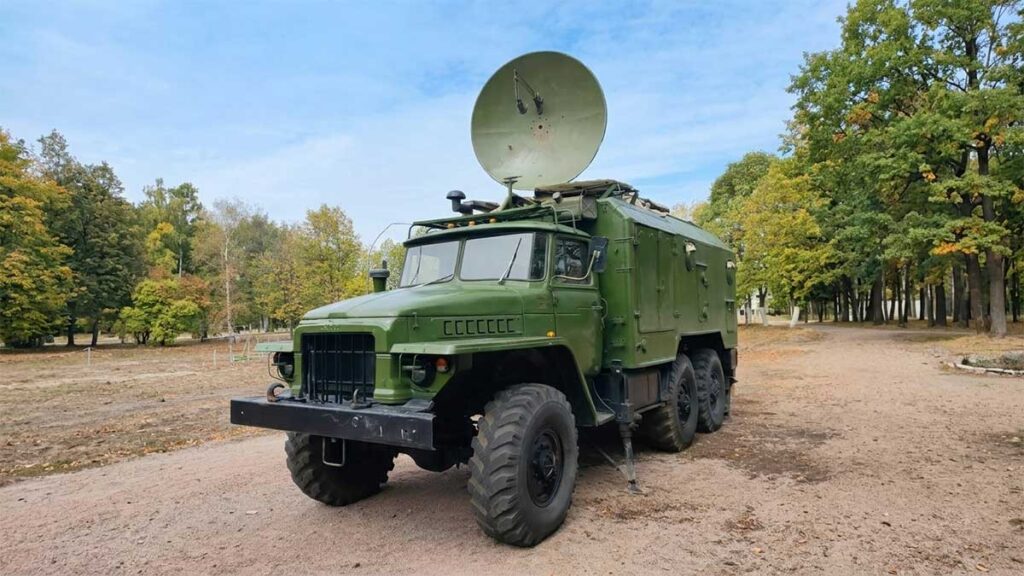
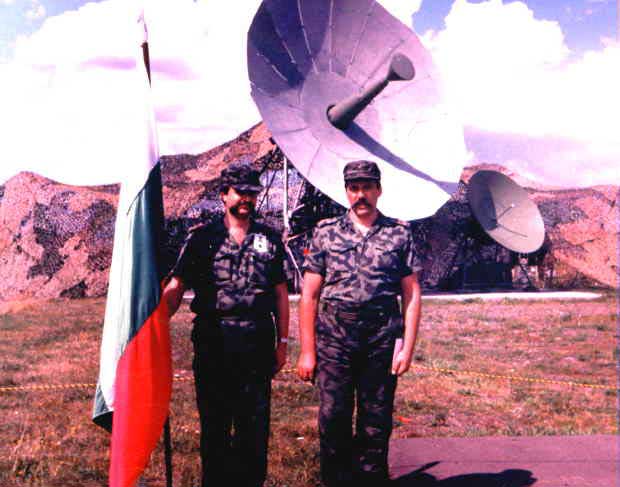
He began to announce who was assigned where. He reached me. He read that I would be the head of… “Kristal”. I looked at him, I looked at the sign on the confectionery, him again, the sign again… The man sensed that something was wrong in my gaze and quickly corrected himself: “Not this one… head of R-440 – Kristal”. Only then did I understand what it was about. I had at least heard about R-440 at the Military School. It turned out that “Kristal” was simply the conventional name of the station. Today its technical data can now be freely found on the Internet.
Our course was in Plovdiv
We studied, so to speak, together with our teachers. The first unofficial space communications were also carried out near Plovdiv. We were allowed to use a satellite with the conditional number “43”, which we joked about as “Model 43”, because it descended very low to the horizon. But even then we managed to maintain the connection in a mode below the noise level.
Satellite communication has always been an expensive pleasure, but it has enormous advantages. With our space station and the equipment for stable encryption, with a well-trained crew, it was possible to organize a connection to the final correspondents in less than a minute. The quality was measured by the number of errors in six months of continuous operation! It was possible to organize communication below the noise level in the air – practically invisible to enemy intelligence. We also managed to make an encrypted telephone conversation through a communication channel of only 600 bps with guaranteed stability. Anyone who has studied more theory will tell you that this is theoretically impossible. Yes, but we did it practically. An electronic computer constantly monitored the location of the satellites in an elliptical orbit and automatically moved the antenna towards them. Even today, not every modern station has such extras.
Innovations on the verge of the impossible: From space to Cambodia
It was difficult to implement innovations then. And now it seems that it is not much easier. I will never forget the words of another great military leader of ours. I demonstrated to him at the Radio Reception Center of the Ministry of Defense how we could transmit and receive documents to our contingent in Cambodia using a shortwave packet radio connection between computers:
“Very well, guys, bravo for your enthusiasm… but let the radio operators receive their reports by ear first, and then you continue to do your experiments…”
This statement actually made our further work meaningless… It’s no wonder that the radio operators received a report by ear for more than half an hour, while it passed through the packet modems in three minutes…
My correspondent in Cambodia was the same Petty Officer Vasil Yordanov Vassilev from the crew of the space station. With his help (and with a lot of ingenuity) we managed to build a working system from absolutely discarded products. Thanks to it, our soldiers in Cambodia could talk to their families in Bulgaria completely free of charge, with an alternative of 6 dollars per minute via an American satellite.
Lifelong lessons
During these years, I learned three most important things:
- The most valuable thing is people. Even the most expensive equipment with a shoddy crew is just a pile of iron. And vice versa – even with scrapped equipment, but with quality, motivated and well-trained people, miracles can be achieved (as we proved with the connection in Cambodia).
- The best investment is in people, in their knowledge and skills. It pays off many times over. Technologies become obsolete in days, and people improve. If you motivate them correctly, they can achieve much more than their own limits. If you fail to motivate them – you have lost the battle before it even begins.
- Each person is a unique universe. Everyone is managed in their own way and requires extremely careful treatment. If you manage to find the key to a person, he respects you to the end. I learned that you can break through with your own authority, without “ties”. And that if you hold on to your authority, your subordinates are ready to step into the fire for you.
There is something to be proud of, that we are Bulgarians!
The successes achieved should be respected and celebrated. They are a historical fact and there is no need to invent them. When it comes to national pride, modesty is completely unnecessary. Today, a large part of NATO officers already know what we can do and what we are good at. We have earned their respect and trust as equal partners and friends. They know that they have something to learn from us.
The coincidence of this historical success of ours with the date May 24 may be coincidental, but it is deeply symbolic. For us, this was a real enlightenment in the world of communication and information systems.
📢 Last but not least: AN APPEAL!
Friends, colleagues, crew members and commanders! Now, on May 24, 2026, it is 39 years since that memorable day in the walnut orchard.
Next year we have a big 40th anniversary coming up! The idea is to use the remaining year to find and gather absolutely everyone who was in one way or another connected to this historical event.
If you recognize yourself, a loved one or a colleague in this story, show it to them and let’s reconnect via the Internet! Let’s get together next year and raise a glass to what we did together!