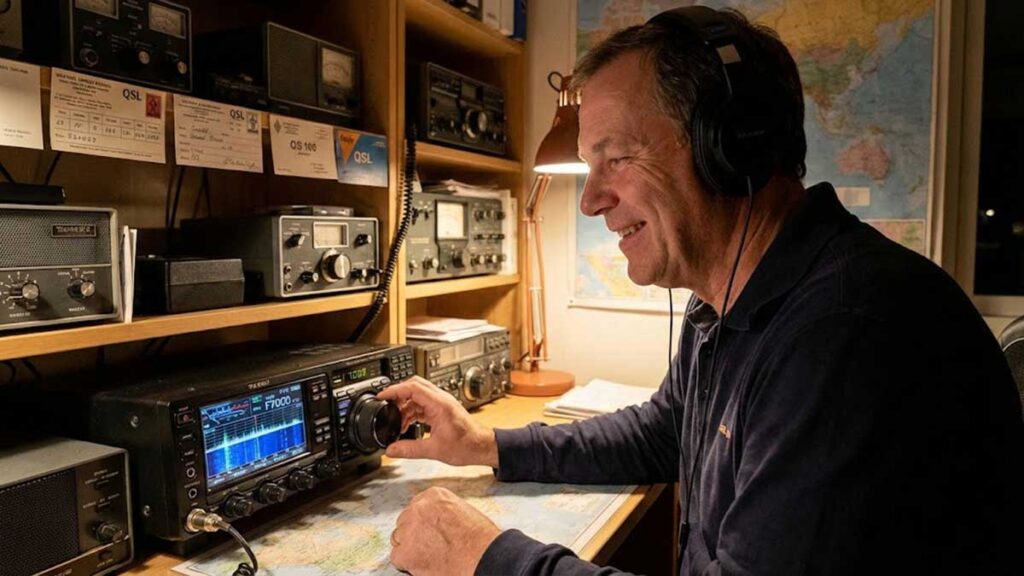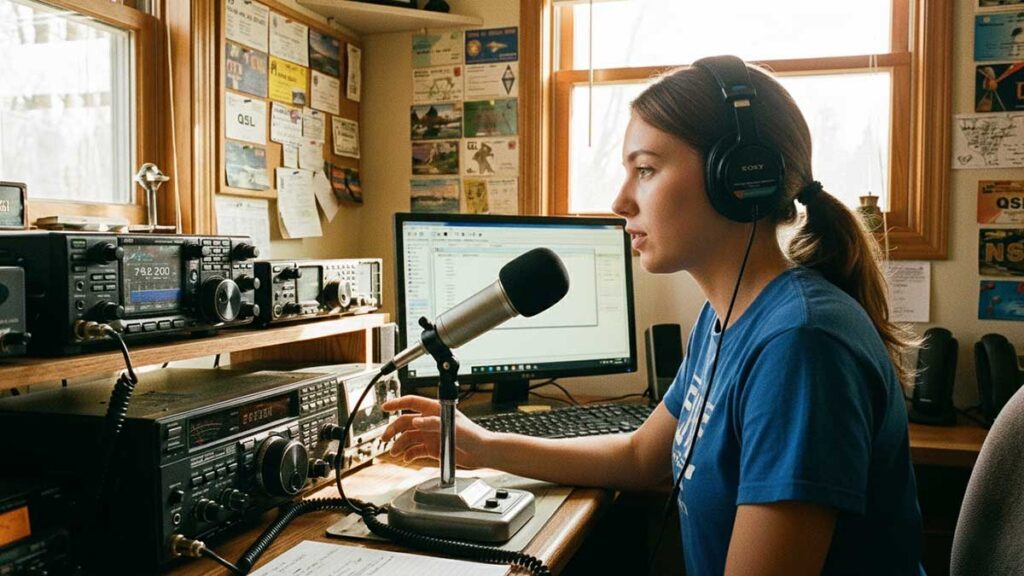
In a walnut orchard 39 years ago: The beginning of the space age in BA

В една орехова градина преди 39 години: Началото на космическата ера в Българската армия
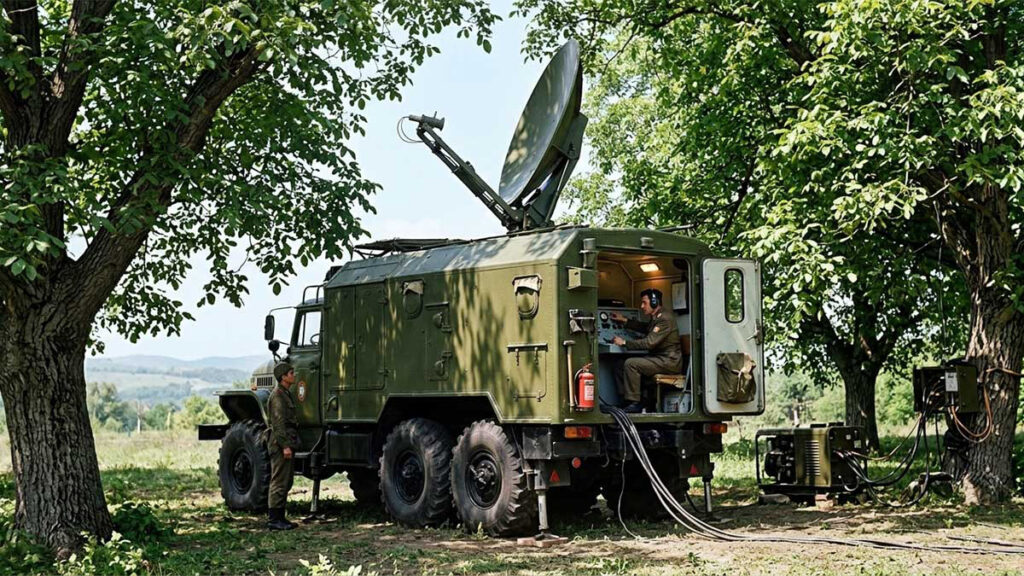
The beginning of the space age in the Bulgarian Academy of Sciences (the image is illustrative, not P-440-O)

In a walnut orchard 39 years ago: The beginning of the space age in the Bulgarian Academy of Sciences army

  • Place: Walnut orchard near the village of Botevo, Tundzha municipality, Yambol region.
  • Time: May 24, 1987, exactly 39 years ago.
  • Acting person: me – a rookie officer… lieutenant engineer.

The sun is fighting the dense walnut forest. The birds are welcoming the approaching summer with their songs. The air is fresh. It is lunchtime, but I don’t feel any hunger.

I am sitting on the steps of the space station. The equipment is humming softly behind me. I feel a little sad… My classmates are meeting today at the “Mother Bulgaria” monument in Veliko Tarnovo to celebrate the 5th anniversary of the graduation of the Second High School “Vasil Drumev”… Where will they continue tonight? We have always been very close and together everywhere, and today I am not there… Will they understand me? After all, it was not by chance that I did not go with them.

At that time, I could neither boast nor even explain why I was not at the meeting. As a colleague says, simply “if the service requires it and does not contradict the statutes…”.

Sad, but happy! Why? Because we had just established

THE FIRST official space connection in the history of the Bulgarian Army.

The exact term is “satellite”, but for some reason “space” gained greater popularity among us.
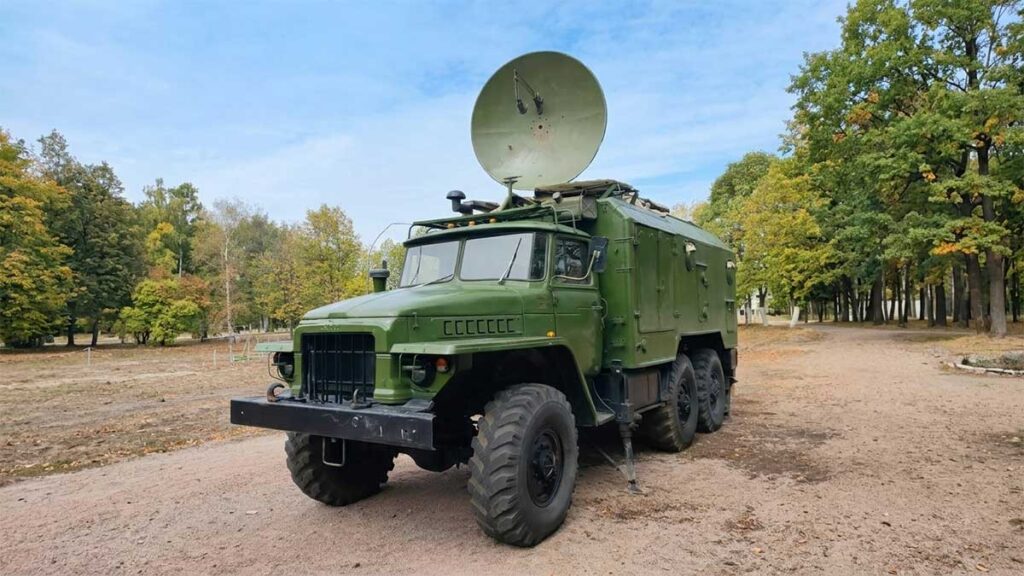
Station R-440-O
Station R-440-O

Our correspondent was the station of the Navy (VMF), with Chief Lieutenant Commander Emil Popov and Deputy Midshipman Pavel Pavlov (LZ4PV).

My crew was also somewhat thoughtful. These guys were Senior Sergeant Vasil Yordanov Vassilev (LZ3WW – now a reserve sergeant), Senior Sergeant Valentin Stanchev Tsanov (also a reserve), Private Emil Spasov Stoyanov, Private Toni Denchev Iliev and Private Stefan Iliev Stefanov. In just a few months, this crew had become like a well-oiled machine – a real “platoon of excellent guys”. Truly excellent fighters and men with whom we became friends and we can rely on each other.

I was warned that the brigade commander was approaching, along with other of my superiors. I prepared to meet them.

The order that went down in history

They were coming to greet us. The brigade chief of staff read out an order:

“… at 11:50 on May 24, 1987, the crew of the R-440 space station consisting of… established for the FIRST TIME in the history of the Armed Forces…”
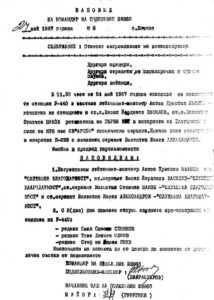
Order on the occasion of the first satellite connection in BA.
I admit, I didn’t listen to the text

I didn’t even hear what the awards were. For me, the important thing was that everything had gone exactly as it should have, that we had succeeded. I was proud of my crew. The credit was shared.

And it wasn’t just my crew’s. I felt immense gratitude to:

  • The then Chief of Staff of the battalion – Captain Nikola Lazarov (LZ5NL – now a colonel from the reserve);
  • The head of the radio department – ​​Colonel Yanko Nikov (now in a better world);
  • His assistant for radio and space communications – Colonel Dimitar Asenov Dimitrov (from the reserve);
  • The head of the administration at the time – General Kirov.
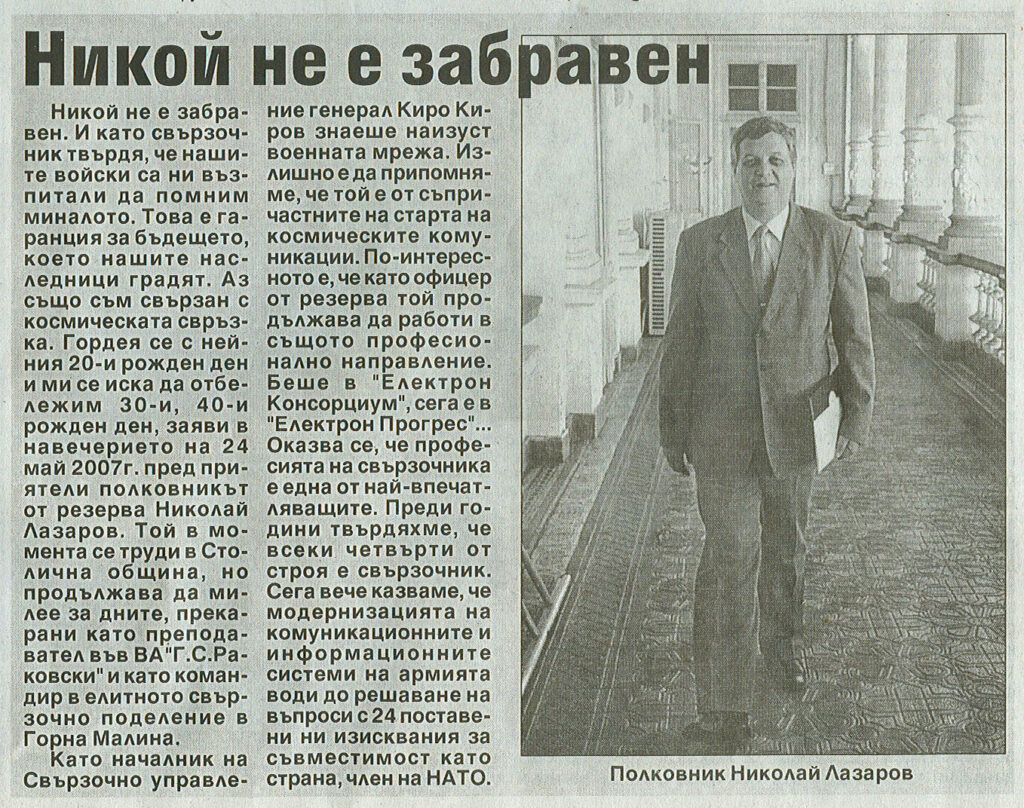
P-k Eng. from the reserve Nikola Lazarov (LZ5NL)

The credit was equally due to our correspondents from the Navy, as well as to the people thanks to whom the channels were encrypted and put into use – Senior Sergeant Valentin Alexandrov, Lieutenant Tihomir Todorov and the then head of the department in the CIS management at the General Staff (later Brigadier General) Boyko Simitchiev. The fact that our connection was the first does not in any way diminish the merit of all the other “cosmonauts” (as we were called then) from the Land Forces in Nova Zagora, Suhodol, Plovdiv and Sliven – this was an entire national system for space communication, ensuring communication in the country and with the Supreme Command of the Armed Forces of the Republic of Bulgaria.

I am afraid of missing someone, so I will not list them all, but each of them is in my heart.

These were not just officers and sergeants from the “analog era”. These were the few servicemen at that time who were implementing and using digital communications – people with an innate sense of new technologies.

How the “stiffened” system was broken through

With my current experience (already as a former colonel, although still a teenager at heart), I appreciate what it cost my superiors to ensure this success. The army was an extremely conservative structure at the time, and it was almost absurd to break through with something new. That was the case for many years of my service.
I will never forget the words of one of my superiors when I “made up my mind” to go to a course on space communications (after all, I was one of the first to experience such a technique in person, which I initially understood nothing about):

“Hey, lieutenant, where are you going? At least twenty people in the USSR have already taken such a course! Grab your books and study, the station has documentation…”

Fortunately, there were also superiors who knew that without training there is no implementation. They managed to organize a course here, in Bulgaria, on their own. And the documentation (Soviet production) was fortunately detailed enough.
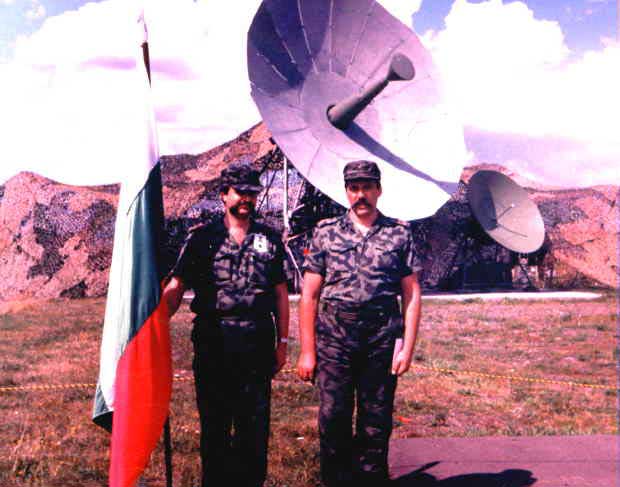
Anton Ivanov (LZ3AI) and Vasil Vassilev (LZ3WW) during an exercise in Germany
Where did we start from

To understand what level I was starting from, I will tell you how I found out what position I was assigned to. We were about ten officers, just assigned to the unit. We gathered at the entrance to the Ministry of Defense on Aksakov Street. The personnel officer came and told us to move a little to the side so as not to disturb the people passing by. We went to the then well-known confectionery “Kristal”.

He began to announce who was assigned where. He reached me. He read that I would be the head of… “Kristal”. I looked at him, I looked at the sign on the confectionery, him again, the sign again… The man sensed that something was wrong in my gaze and quickly corrected himself: “Not this one… head of R-440 – Kristal”. Only then did I understand what it was about. I had at least heard about R-440 at the Military School. It turned out that “Kristal” was simply the conventional name of the station. Today its technical data can now be freely found on the Internet.

Our course was in Plovdiv

We studied, so to speak, together with our teachers. The first unofficial space communications were also carried out near Plovdiv. We were allowed to use a satellite with the conditional number “43”, which we joked about as “Model 43”, because it descended very low to the horizon. But even then we managed to maintain the connection in a mode below the noise level.

Satellite communication has always been an expensive pleasure, but it has enormous advantages. With our space station and the equipment for stable encryption, with a well-trained crew, it was possible to organize a connection to the final correspondents in less than a minute. The quality was measured by the number of errors in six months of continuous operation! It was possible to organize communication below the noise level in the air – practically invisible to enemy intelligence. We also managed to make an encrypted telephone conversation through a communication channel of only 600 bps with guaranteed stability. Anyone who has studied more theory will tell you that this is theoretically impossible. Yes, but we did it practically. An electronic computer constantly monitored the location of the satellites in an elliptical orbit and automatically moved the antenna towards them. Even today, not every modern station has such extras.
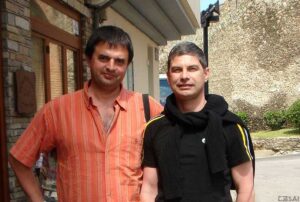
Anton Ivanov and Emil Popov - a chance meeting in Thessaloniki.
Anton Ivanov and Emil Popov – a chance meeting in Thessaloniki.
Innovations on the verge of the impossible: From space to Cambodia

It was difficult to implement innovations then. And now it seems that it is not much easier. I will never forget the words of another great military leader of ours. I demonstrated to him at the Radio Reception Center of the Ministry of Defense how we could transmit and receive documents to our contingent in Cambodia using a shortwave packet radio connection between computers:

“Very well, guys, bravo for your enthusiasm… but let the radio operators receive their reports by ear first, and then you continue to do your experiments…”

This statement actually made our further work meaningless… It’s no wonder that the radio operators received a report by ear for more than half an hour, while it passed through the packet modems in three minutes…

My correspondent in Cambodia was the same Petty Officer Vasil Yordanov Vassilev from the crew of the space station. With his help (and with a lot of ingenuity) we managed to build a working system from absolutely discarded products. Thanks to it, our soldiers in Cambodia could talk to their families in Bulgaria completely free of charge, with an alternative of 6 dollars per minute via an American satellite.

Lifelong lessons

During these years, I learned three most important things:

  1. The most valuable thing is people. Even the most expensive equipment with a shoddy crew is just a pile of iron. And vice versa – even with scrapped equipment, but with quality, motivated and well-trained people, miracles can be achieved (as we proved with the connection in Cambodia).
  2. The best investment is in people, in their knowledge and skills. It pays off many times over. Technologies become obsolete in days, and people improve. If you motivate them correctly, they can achieve much more than their own limits. If you fail to motivate them – you have lost the battle before it even begins.
  3. Each person is a unique universe. Everyone is managed in their own way and requires extremely careful treatment. If you manage to find the key to a person, he respects you to the end. I learned that you can break through with your own authority, without “ties”. And that if you hold on to your authority, your subordinates are ready to step into the fire for you.
There is something to be proud of, that we are Bulgarians!

The successes achieved should be respected and celebrated. They are a historical fact and there is no need to invent them. When it comes to national pride, modesty is completely unnecessary. Today, a large part of NATO officers already know what we can do and what we are good at. We have earned their respect and trust as equal partners and friends. They know that they have something to learn from us.

The coincidence of this historical success of ours with the date May 24 may be coincidental, but it is deeply symbolic. For us, this was a real enlightenment in the world of communication and information systems.
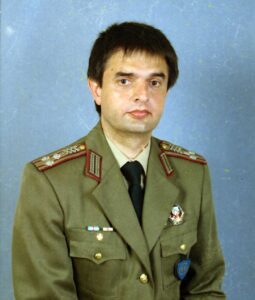
Anton Ivanov as Colonel Engineer

📢 Last but not least: AN APPEAL!

Friends, colleagues, crew members and commanders! Now, on May 24, 2026, it is 39 years since that memorable day in the walnut orchard.

Next year we have a big 40th anniversary coming up! The idea is to use the remaining year to find and gather absolutely everyone who was in one way or another connected to this historical event.

If you recognize yourself, a loved one or a colleague in this story, show it to them and let’s reconnect via the Internet! Let’s get together next year and raise a glass to what we did together!
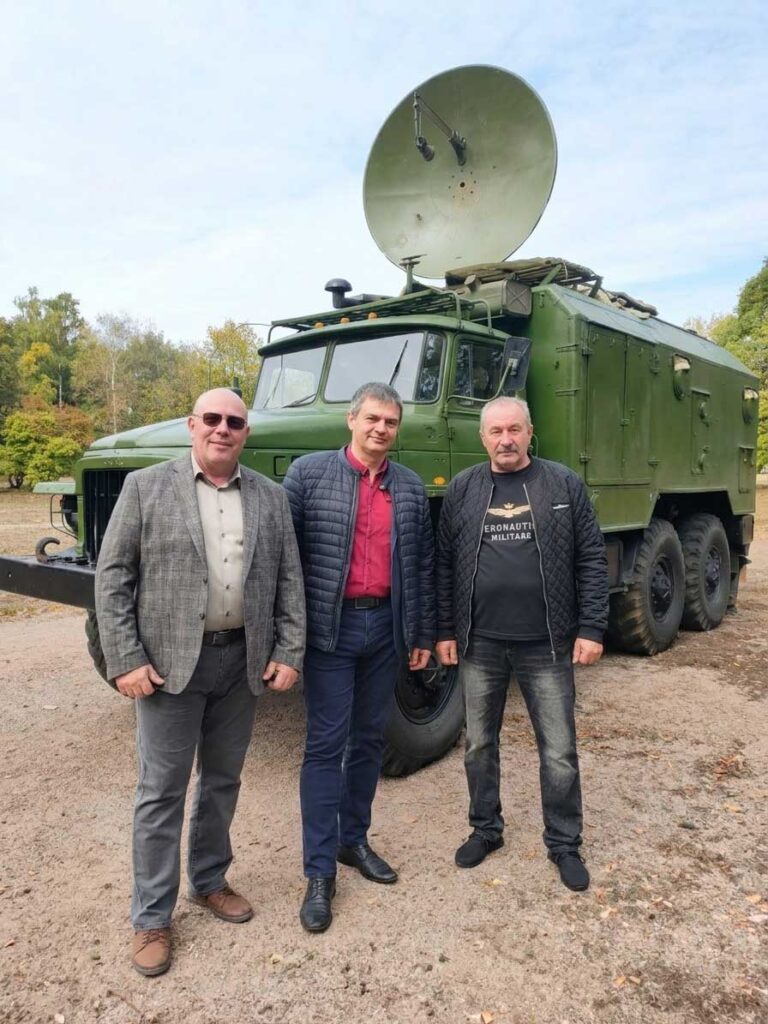
Georgi Margitin, Anton Ivanov and Valentin Tsanov in front of the R-440-O

World Amateur Radio Day 2026: More than a century of innovation and global friendship

World Amateur Radio Day 2026

April 18 – The Day the World Connects Without Borders

Every year on April 18, millions of people around the world tune in their transceivers to celebrate World Amateur Radio Day. This is not just a date on the calendar, but the anniversary of the founding of the International Amateur Radio Union (IARU) in Paris in 1925.

Today, with over 3,000,000 licensed operators worldwide, amateur radio is more vibrant than ever. The theme for 2026 – “Developing the Spirit of Amateur Radio through Innovation” – reminds us that we are not just consumers of technology, but creators of it.

Success Story: From Paris to the World

A century ago, skeptics believed that the shortwave spectrum was useless. However, pioneering amateur radio operators proved otherwise by discovering long-distance propagation. It was to protect these discoveries and preserve frequencies for the community that representatives from 25 countries founded the IARU. Today, the organization includes 160 countries in three regions, with Bulgaria being a proud part of Region 1.

The Bulgarian Footprint on the Air

Bulgarian radio amateurs have a long and distinguished history. From the first experimental signals in the 1930s to today’s high-tech DX expeditions and contest achievements, LZ operators have always been among the most active and technically prepared in Europe. The Bulgarian Federation of Radio Amateurs (BFRA) continues to maintain this spirit, uniting generations of enthusiasts who both preserve the traditions of Morse code (CW) and master the latest digital modes.

Innovations Born in the Ham Radio Den (Ham Radio Shack)

Few people know that many of the modern technologies we take for granted have their roots in amateur experiments:

  • Mobile Communications and Cellular Networks: Early developments in the field of VHF/UHF repeaters laid the foundations of modern mobile telephony.
  • Satellite Technologies: Amateur radio operators were among the first to design and launch small satellites (OSCAR) into orbit, demonstrating the capabilities of low-orbit communications.
  • Digital Modes and Practical Applications: Amateur radio operators not only create protocols, but also successfully implement them in critical situations. A striking example from Bulgarian amateur radio history is the work of Toni (LZ3AI) and Vasil (LZ3WW). During the mission of the Bulgarian contingent in Cambodia, when official reports were transmitted slowly via telegraphy (CW), LZ3AI and LZ3WW demonstrated the power of Packet Radio on HF. They established a Sofia-Cambodia service link, where reports that previously took over half an hour were transmitted in a matter of minutes. This case clearly demonstrated to military authorities the advantages of amateur radio digital technologies for fast and reliable data exchange.
  • The revolution in weak signals: Protocols such as FT8, developed by Nobel laureate Joe Taylor (K1JT), have revolutionized communication by allowing communication at extremely low signal levels (below the noise floor) – an innovation that finds application even in deep space.
  • The next step: FT2. Today, in the spirit of the IARU theme for 2026, the amateur radio community is once again at the forefront of innovation with the experimental FT2 mode. Although not yet officially adopted as a standard, FT2 promises even better efficiency and resilience, proving that the search for better communication solutions on the air never stops.
Why is amateur radio important today?

In a world dependent on the internet and infrastructure, amateur radio remains the only community capable of establishing communication in global emergencies when all else fails. We are the “last line of defense” and at the same time a laboratory for future engineers.

The story of LZ3AI and LZ3WW is proof that amateur radio is not just a hobby, but a powerful tool for innovation and practical help when it is most needed. Today, with modes like FT8 and experiments with FT2, we continue to pave the way for future communications.

Happy holiday, colleagues! May the air be clear, and the connections – far! 73!


Bibliography and sources:
  • International Amateur Radio Union (IARU). (2025). World Amateur Radio Day 2026 Theme: Sustaining the Amateur Radio Spirit through Innovation. Source: www.iaru.org
  • International Telecommunication Union (ITU). Amateur Service Regulations and History.
  • Danev, P. (LZ1US), Radio Amateurism in Bulgaria. History, facts, memories, Sofia, 1998.
  • Silver, H.W. (2023). The ARRL Handbook for Radio Communications. American Radio Relay League.

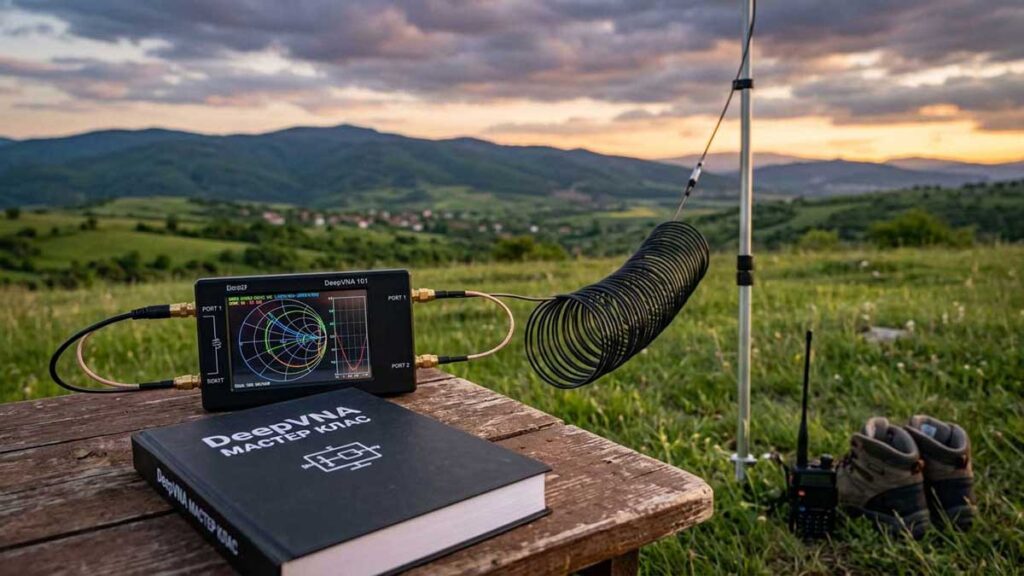
DeepVNA Master Class: Your practical guide to the vector analyzer

DeepVNA Master Class

DeepVNA Master Class: Your Practical Guide to the Vector Analyzer

Introduction: When a Transceiver Is Not Enough

Every radio amateur knows – a good antenna is half a transceiver. But how do we know if it is really working at its maximum, especially when we are in the field in field conditions (SOTA/POTA)? This is where the vector analyzer comes to the rescue. NanoVNA and its older brothers, such as DeepVNA 101, changed the rules of the game, but they come with one serious problem – the official instructions are often “dry”, incomplete and written in an incomprehensible technical language, which is sometimes only Chinese.

That’s how the idea for this book was born. After I was often asked how exactly I use my DeepVNA to tune JPC-12 or End-Fed antennas, I decided to turn my experience into a structured, practical guide. “DeepVNA Master Class” is not just a translation of the official operating instructions – it is a “Master Class” born from hundreds of measurements and practical experience in the field.

Who is this book for?

For beginners: If you have just bought a DeepVNA (NanoVNA or similar device) and are wondering what all those graphs it draws mean, this book will take you step by step in understandable language to learn them. You will learn why calibration is critical and how not to be “tricked” by your own device.

For advanced users: Here you will find details about the Smith chart (without unnecessary formulas), TDR diagnostics for finding defects in cables and how to use PC software (NanoVNA Saver) for precise tuning of multi-band antennas.

Key highlights in the “DeepVNA Master Class”

The language of the radio amateur: Forget complex mathematical formulas. Everything is explained simply, with clear examples from practice.

Practical scenarios: Tuning of dipoles, vertical antennas (like Rybakov), end-fed systems and filters.

Practical recipes: Specific data for popular antennas (coils and windings of JPC-12, lengths for End-Fed).

The Hidden Dangers: How to calibrate, where the power setting is located, and what to do if the touchscreen stops working.

PC Software: A quick guide to the NanoVNA Saver and how it helps with End-Fed antennas and other multiband antennas.

This book is the perfect complement to my previous FTDX10 and FTX-1F “Master Classes,” closing the loop between transceiver and antenna.

📥 Download the book in PDF format

You can download the full version of the book “FTX-1F MASTER CLASS Complete Guide to Filters, Audio Settings and Operational Mastery for the Yaesu FTX-1F Transceiver” completely free of charge from the link below:

👉 [Download PDF: DeepVNA 101/NanoVNA-F Master Class – LZ3AI]

Support the shared experience

“This guide is my contribution to the amateur radio community and will always be free to share. If you found the information in it useful and want to express your support for my work, you can buy me a cup of virtual coffee via the link below. Any such recognition motivates me to continue sharing practical advice and new ones on the site. Thank you and 73!” — Tony, LZ3AI

Buy me a coffee
Your feedback is important!

Amateur radio is a hobby of shared experience. Do you use different settings for your VNA? Do you have a “secret recipe” for easy and quick tuning of your antenna for field work?

I would be happy to share your opinions, corrections or personal settings in the comments below the article or over a coffee. Let’s make this guide even more useful for the amateur radio community!

73 and see you on the air!

Tony, LZ3AI

About the author (LZ3AI): “I am a passionate supporter of all things radio. I believe that sharing experiences is the foundation of the amateur radio movement. My “Master Classes” focus on the practical side of things to help you get the most out of your equipment.”

Why do they call us “HAM”? From the legends of Harvard to the first Bulgarian HAM

Why are we called
Why are we called “HAM”? From the legends of Harvard to the first Bulgarian HAM

Why are we called “HAM”? From the legends of Harvard to the first Bulgarian HAM

Have you ever wondered why radio amateurs are called “HAM” (which means “ham” in English)? It sounds a bit funny, doesn’t it? After all, what does a smoked ham have to do with antennas and transceivers?

In this adventure, we will find out how an insult became an honorary title and how Bulgarians “broke” the airwaves long before the internet was even an idea.

Legends: Three Students and a Congress

One of the most entertaining (albeit slightly embellished) stories takes us back to 1908 at Harvard University. It is said that three students – Hyman, Almy and Murray – founded one of the first amateur radio stations. They simply called it HAM (from their initials).

The story goes that when the US government decided to get its hands on the airwaves in 1911, young Hyman gave such a passionate speech to Congress that politicians were moved and left frequencies for amateurs. Since then, the whole world has started calling operators “HAMs.” A nice story, isn’t it? Almost like Hollywood!

The Truth: Ham Hands and “Filthy” Airwaves

If you ask serious historians, however, the version is a little more prosaic and… biting. At the beginning of the 20th century, professional telegraph operators were real “aristocrats” of the airwaves. They called any novice operator who transmitted Morse code clumsily and with errors, “ham-fisted” (with hands like hams – fat and clumsy).

When radio amateurs started building transmitters in their basements and “interfering” with serious military stations, the professionals angrily shouted: “Those hams are jamming our signals again!”. Instead of getting angry, the radio amateurs said to themselves: “Hey, that sounds cool!” and proudly adopted the name.

The Bulgarian Trail: The True Pioneers of LZ

While the rest of the world was called “hams,” in our country history is written with great enthusiasm and little available materials. Here’s how it all happened:

  • The Beginning (1926): It all started in the Sofia City Casino, where 38 daredevils founded the first “Bulgarian Radio Club.” Their goal? To unite all those interested in the “invisible waves”.
  • The First Call (1938): The legendary Ivan Djakov constructed a transmitter in Sofia and on April 24, 1938, sent the first amateur radio call from Bulgaria: “CQ de LZ1ID”. Djakov became so popular abroad that he was a “desired prey” for every amateur radio operator in the world! In 1945, Ivan Dzhakov resumed his amateur radio activity from Sofia with the initials LZ1XX, and later LZ1RF.
  • The first club station (1949): At the very peak of Christmas (December 25) in 1949, LZ1AA began operating with operator Ognyan Kukurov.
  • LZ1KAB and the era of DOSO (1952): The Central Radio Club was opened on Slaveykov Square. The first official connection was on 7 MHz, again by Ognyan Kukurov. From then on, Bulgarian radio amateurs became some of the best in the world in “fox hunting” and high-speed telegraphy.
Why are we HAMs today?

Whether the name comes from “clumsy hands” or from three students, today being a HAM means being part of a global network. We are the people who stay connected when everything else stops. We are the ones who organized the first radio connections between computers, when the Internet had not yet entered our daily lives, including to the military contingent in Cambodia (Anton Ivanov – LZ3AI here and Vasil Vassilev – LZ3WW there). We are the experimenters who reflect signals from the Moon and talk to Antarctica (with initials LZ0A, thanks to Miko Mikov – LZ1RR and Yordan Yankov – LZ1UU).

So, if you hear “HAM”, don’t think of a sandwich. Think of 100 years of innovation and friendship on the air!

73 and a follow-up on the air!

Tony, LZ3AI


Bibliography and sources
  1. Danev, P. (LZ1US), Radio amateurism in Bulgaria. History, facts, memories, Sofia, 1998.
  2. Boyadzhiev, S., Macedonia in my life. Memories, Sofia, 2013.
  3. Wikipedia, History of Amateur Radio in Bulgaria (free encyclopedia).
  4. Radio Magazine (archives), organ of the Bulgarian Radio and Television Association/National Radio and Television Association.
  5. ARRL (American Radio Relay League), Etymology of the term ‘HAM’.

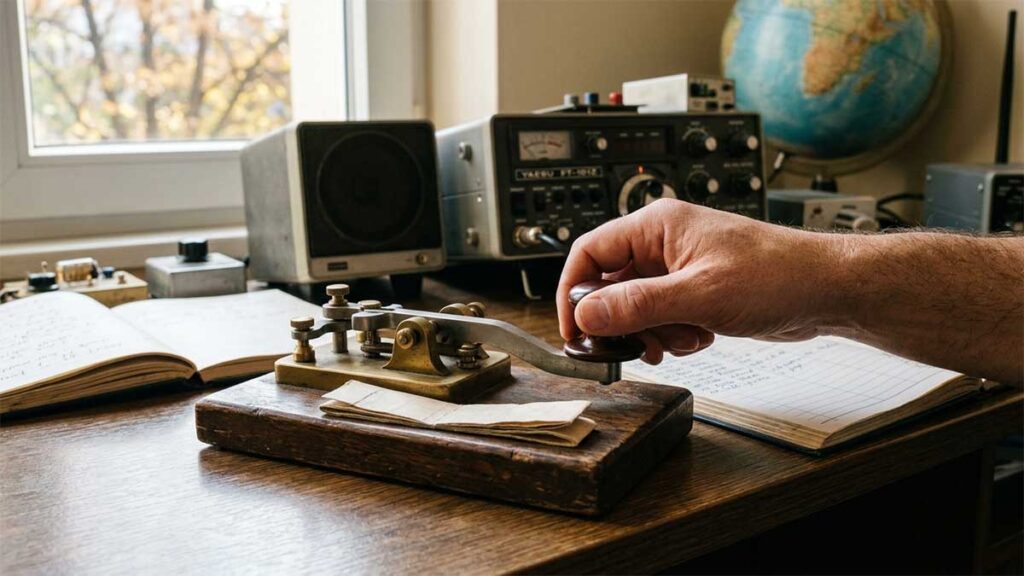
How to set up a manual telegraph key: old-school master tips

How to set up a hand telegraph key: old-school master tips

How to set up a hand telegraph key: old-school master tips

For many radio amateurs, the hand telegraph key (the telegraph manipulator, affectionately called a “pedestrian” key or “hammer”) is a symbol of true radio amateurism. But to make broadcasting a pleasure, not a wrist torture, the key must be precisely tuned.

In this short guide, I have gathered the experience of generations of professional radio telegraphers and radio amateurs to help you find your ideal balance.

The roots of craftsmanship: the old school

Before we move on to the technical details, I would like to mention the people from whom I “stole” the craft half a century ago and more in Veliko Tarnovo. These are men for whom telegraphy was not just a profession, but an art and a calling. The craftsmanship was passed down to me by the strict but fair officers Colonel Ovcharov and Colonel Kokalov in the radio club, and later in the military school and Colonel Rakov. In amateur radio, my mentor and teacher was Pop Stefan (LZ2PS), at that time LZ2F166 (hence my call sign is LZ2F266). These teachers didn’t just show us how to transmit and turn the screws on the key, they taught us the “music” of radiotelegraphy, respect for the correct sign. This article is a small bow to their contribution and recognition of their care, which grew into endless respect and lifelong friendship.

The “love” of the hand key is a diagnosis that is not cured, but only passed on to the next generations. It is something intimate. The rhythm of the correct key is like meditation – a feeling that no automaton can replace.

A poorly tuned key is like an out-of-tune violin – no matter how hard you try, the melody is lame, and your hand seizes up in 10 minutes of work.

Here is my “philosophy” for tuning the classical treble clef, conveyed as text.

1. Preparation: stability and position

Before turning the screws, take care of the base. The key should be firmly fixed on a heavy pad or directly to the table.

The golden rule for posture:

  • The elbow should be at table level.
  • The wrist should be off the edge of the table (in the air) so that it can move freely. The hand should be a natural extension of the key.
  • Visualization: Imagine that the contact is not in the key itself, but just below the crease of your wrist. Try to mentally “contact” there, with this joint, which without a signal is slightly raised, and with dashes and dots it goes below the level of the base of the key.
2. The side bearings: eliminating the backlash

First of all, pay attention to the side screws.

  1. Loosen them as much as possible until the arm starts to click noticeably.
  2. Start tightening them carefully until the lateral movement disappears completely, but no more. The arm should move freely only up and down, without any movement left and right.
  3. Caution: Stop right at this point! If you overtighten, the up and down movement will become “wooden” and heavy, and the spring will not do its job properly.

If the key has lateral play, it “dances” under your fingers and the focus is lost. You feel it as foreign and unruly.

3. The distance between the contacts: the “A4” method

Here is the great secret of speed and a clean sign. Too much distance leads to jostling, and too little – to sticking of the signs.

  • For beginners: start with a larger stroke (about 0.6 mm) to “loosen” the wrist.
  • For advanced users: the gold standard is 0.15 – 0.3 mm.

The A4 sheet trick: Take a regular printer sheet (A4, 80 g). Fold a strip along the narrow side 4 times (to make four layers – this is about 0.6 mm). Place it between the contacts and adjust so that you pull it with force. As you progress in your training, reduce the folds to 1 or 2 layers (this is about 0.15 – 0.3 mm).

Many beginners make the mistake of leaving an extremely large stroke, thinking that this way they transmit more accurately. About a millimeter. Big mistake! Such a stroke leads to a “bump”, which tires the wrist and spoils the rhythm.

4. Spring tension: the weight of the hand

The spring should not “stretch” and fight with your hand. It only serves to return the key to its original position.

  • Adjustment: Loosen the spring as much as possible. Start tightening it very slightly until you feel that it can withstand the weight of your hand (with a relaxed hand, without resting your wrist on the table). It should not allow the contacts to close. The key should be “soft”, but firmly open when at rest. The spring should be just enough tension to reliably return the lever up without “kicking” you back.
  • When the spring is too tight, you will feel as if your hand is starting to work “from the shoulder”, and this should not happen – it should only work from the wrist.
5. Conclusion and advice from the old school

Handling with a manual key is not a job with your fingers, but a “swing” of the entire wrist. Your fingers only surround the knob, without squeezing it. With your index and middle fingers, you press down, and your thumb and ring finger support the ball of the key as it moves up. The swings are made with your wrist, not your fingers! When you achieve the correct setting, you will feel how the key “sings” along with you, you will feel it as an integral part of your hand.

My “secret” tip: posture and attitude

Don’t adjust the switch while holding it in your lap. It should be firmly attached to a heavy base (a marble slab, a thick metal base, or directly to the table). Your elbow should be at the level of the table, and your wrist should be slightly raised, as if you were holding a tennis ball.

Feel the switch! Love it! It will pay off and you will be proud that you master the “craft” that only selected people are dedicated to.

Do you have your own specific trick for adjusting the manual switch? Who were your mentors and teachers? Share it in the comments, this will be your personal contribution and motivation for young radio amateurs or those who want to become one.

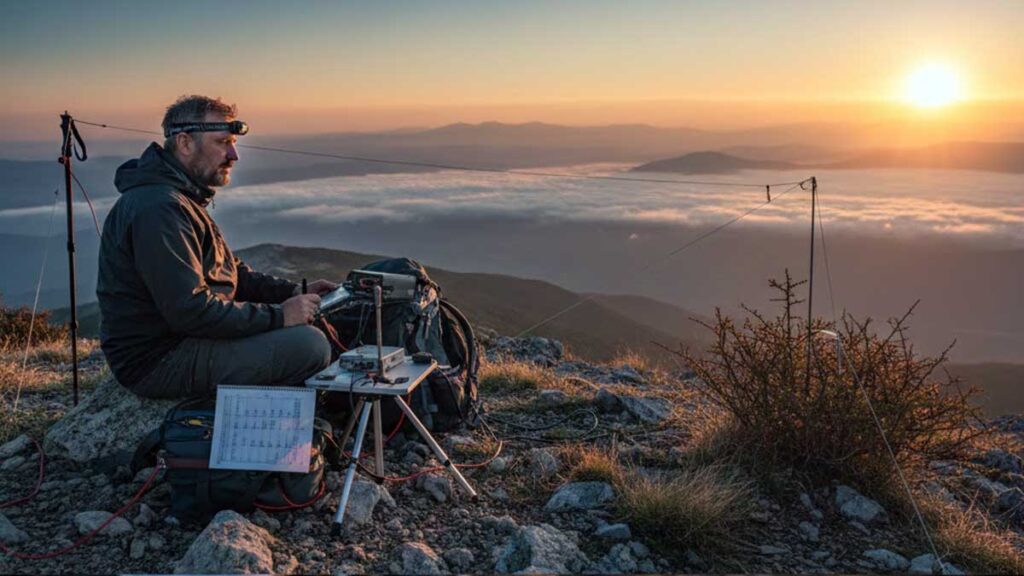
Frequencies, antennas and a little stubbornness: Practical amateur radio frequencies and bands for Bulgaria

Practical Amateur Radio Frequencies and Bands for Bulgaria

Frequencies, Antennas and a Little Stubbornness: Practical Amateur Radio Frequencies and Bands for Bulgaria

Have you ever opened the official band plan to check exactly where the center of activity was for SOTA/POTA, and after five minutes of reading sub-sections and definitions you forget why you turned on the station in the first place? Don’t worry, you’re not alone.

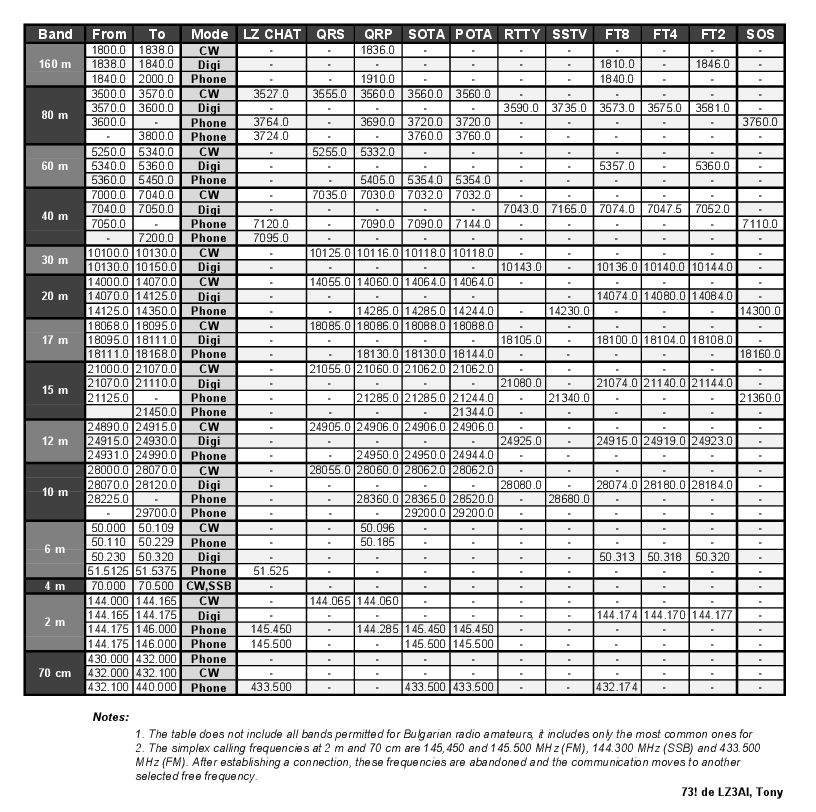
After dozens of attempts, drawing graphs (which look beautiful, but don’t work in the mud of field conditions) and versions that looked more like an accounting report than an amateur radio guide, I present to your attention… version 18.0 (or somewhere in between).

Why another table?

Because I’m tired of “too much info”. I had options with powers, classes, broadcast designations and administrative details in which you can get lost more easily than in the thick fog of Botev Peak.

This table is intentionally incomplete. You won’t find everything in it, but you will find the most important. It was created with one and only one goal: to be a practical tool. I wanted it to have a practical and applied focus, without being some great scientific work.

What’s “under the hood”?
  • Only the “live” bands: I’ve focused on the frequencies where life is really boiling in Bulgaria.
  • Operational accuracy: Where are the Bulgarians (LZ Chat), where are the activators (SOTA/POTA) and where to adjust your antenna so that the SWR doesn’t surprise you right in the middle of the call.
  • The 60-meter bonus: The exact borders for Bulgaria are reflected (for example 5250–5450 kHz) – let’s know our rights (but don’t forget 100 watts for first class, nor how far are the powers of second class!).
  • SOS section: Because in the mountains, safety comes first.
The “One Sheet of A4” Format

The whole philosophy was to fit the table onto one sheet of A4. The idea is simple: print it out, laminate it and throw it in your backpack or stick it on the radio lid. It should withstand coffee, rain and the excitement of another DX.

Work in Progress

Amateur radio is a dynamic activity. This table is not “cast in concrete”. It is alive and will probably undergo further changes in motion while we use it in the field.

I also need your “report” (feedback): If you see a mistake, if a frequency has “escaped” or you think something important is missing – shoot me with comments and suggestions. I am open to any constructive comments (and a virtual coffee). Or at least a comment below.

Here is the table “Practical amateur radio frequencies and bands for Bulgaria in PDF format”.

As well as the link from which you can buy a coffee! 😉 Here!

“Buy me a coffee”

73 and see you on the air!
Tony


Yaesu FTX-1F Master Class: Much More Than an Instruction Manual

Yaesu FTX-1F Master Class: Much More Than an Instruction

Yaesu FTX-1F Master Class: Much More Than an Instruction

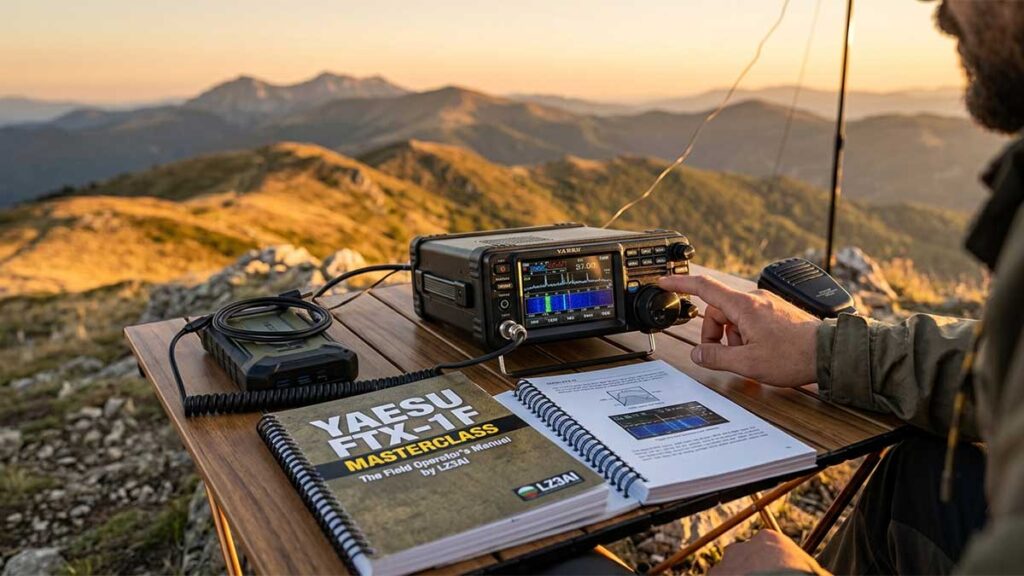
We present to you the long-awaited detailed manual for the revolutionary Yaesu FTX-1F. This is not another dry translation of the technical manual. This is a “Master Class” – a practical synthesis of Yaesu engineering and the real-world experience of Tony, LZ3AI.

The FTX-1F is a revolutionary field transceiver, but its true power is often hidden behind complex menus, layered functions, and unspeakable touch-screen magic. This book is your key to mastering this machine.

What will you find in this manual?

Written for those who don’t just want to operate a radio, but want to master the airwaves and feel the radio as a part of themselves, the manual covers:

  • Intuitive Navigation: Detailed mapping of the menus and the secrets of fast, operational control in the field.
  • Light Intelligence: A complete explanation of the unique VMI (VFO Mode Indicator) system and LED indication, which allow you to operate the radio almost “blindly”.
  • Energy Independence: The critically important battery power section, DC-IN and USB-C (Power Delivery). You’ll learn about battery care and how to stay powered up on the mountaintop.
  • Mastery of Reception: A deep dive into SDR filters, DSP settings, and unique features like Memory Tune (MT).

“Because in the field, you don’t have time for mistakes—you only have time for connections.”

Whether you’re on a SOTA activation on a mountaintop or in your backyard, this guide will transform your FTX-1F from a complex machine into a natural extension of your senses.

📥 Download the book in PDF format

You can download the full version of the book “FTX-1F MASTER CLASS Complete Guide to Filters, Audio Settings and Operational Mastery for the Yaesu FTX-1F Transceiver” completely free of charge from the link below:

👉 [Download PDF: FTX-1F MASTER CLASS – LZ3AI]

Support the shared experience

“This guide is my contribution to the amateur radio community and will always be free to share. If the information in it was useful to you and you want to express your support for my work, you can buy me a cup of virtual coffee via the button below. Any such recognition motivates me to continue sharing practical tips and new ones on the site. Thank you and 73!” — Tony, LZ3AI

Buy me a coffee

Your feedback is important!

Amateur radio is a hobby of shared experience. Do you use different settings for your microphone? Do you have a “secret recipe” for a light and easy antenna for field work?

I would be happy if you share your opinions, corrections or personal settings in the comments below the article or with a coffee. Let’s make this guide even more useful for the Bulgarian community!

73 and see you on the air!

Toni, LZ3AI

FT2 – The New Digital Revolution: Faster than FT4, more dynamic than FT8

FT2 – The New Digital Revolution: Faster than FT4, more dynamic than FT8

FT2 – The New Digital Revolution: Faster than FT4, more dynamic than FT8

FT2 – The New Speed ​​Champion in Amateur Radio – A Practical Guide

The World of Amateur Radio Communications is changing at lightning speed, and if you thought FT8/FT4 was the pinnacle of efficiency, get ready for something new. Starting in early 2026, a new player has hit the airwaves – FT2. This experimental mode promises to make our connections faster than ever, shortening the transmission cycle to an incredible 3.75 seconds.

In this article, we’ll look at what exactly FT2 is, how to set it up, and why time accuracy is no longer just a recommendation, but a critical requirement.

What is FT2?

FT2 is an ultra-fast digital mode integrated into the latest version of WSJT-X Improved (3.1.0) by Uwe, DG2YCB. It should be noted that the name FT2 originally appeared in the Italian project Decodium, but the version in WSJT-X Improved is completely open source and optimized for mass use.

(author’s note. Please note that Decodium’s FT2 and WSJT-X Improved’s FT2 are currently not compatible. Don’t be too happy if you see that JTDX-improved starts decoding FT2 – there is no transmission support, nor are the frequencies set – for the author of JTDX-improved FT2 it is not yet a priority)

FT2 is also integrated in the MSHV version (2.76.5) version by Christo, LZ2HV.

Main features
  • Cycle (T/R period): 3.75 seconds (Compared to 15 sec on FT8 and 7.5 sec on FT4).
  • QSO Duration: A full contact can be completed in less than 15-20 seconds.
  • Sensitivity: About -12 dB to -14 dB (ideal for contests and strong DX signals).
  • Bandwidth: About 120-150 Hz.
What’s the situation with JTDX Improved?

Although the author of JTDX Improved (also based on Igor’s work, UA3DJY) keeps up with the latest news, he is a bit more conservative than Uwe (DG2YCB) regarding experimental modes.

Here’s what you need to know:

  1. Decoding Only: JTDX Improved (in its latest test versions) can detect and display FT2 signals on the waterfall if they are within range of its decoder. This is possible thanks to shared libraries between the two “Improved” versions.
  2. Transmit (TX): As of March 2026, JTDX still does not have an official “FT2” button in the main mode selection menu. JTDX is focused on maximum FT8 sensitivity, while WSJT-X Improved is the “innovation platform” where new things like FT2 are tested.
Where to find FT2? (preferred frequencies as of early 2026)

Since the mode is new, it does not yet have official IARU segments, but the international community has already adopted the following frequencies (for all USB, DATA-U):

Range Frequency (MHz) Note   
160m 1.846 MHz At the end of the digital segment
80m 3.581 MHz Well above FT8 (3.573) and FT4 (3.575)
60 5.360 MHz Be careful with the 60m regulations!
40m 7.052 MHz Traditional place for experiments
30m 10.144 MHz Just over FT4 (10.140)
20m 14.084 MHz (Highest activity – just above FT4 (14.080)
17m 18.108 MHz Just over FT4 (18.104)
15m 21.144 MHz Just over FT4 (21.140)
12m 24.923 MHz Just over FT4 (24.919)
10m 28.184 MHz The second most active frequency – above FT4 (28.180)
6m 50.320 MHz Experimental for Es (sporadic layer)

Note: You don’t need to manually enter these frequencies in WSJT Improved – go to the settings from /File/Settings/Frequencies and somewhere in the field where the frequencies are listed, right-click and select Reset. Most of the frequencies for FT2 will appear (the current version of WSJT Improved is missing only the frequency for 160 m).

How to find out if and where there is activity?

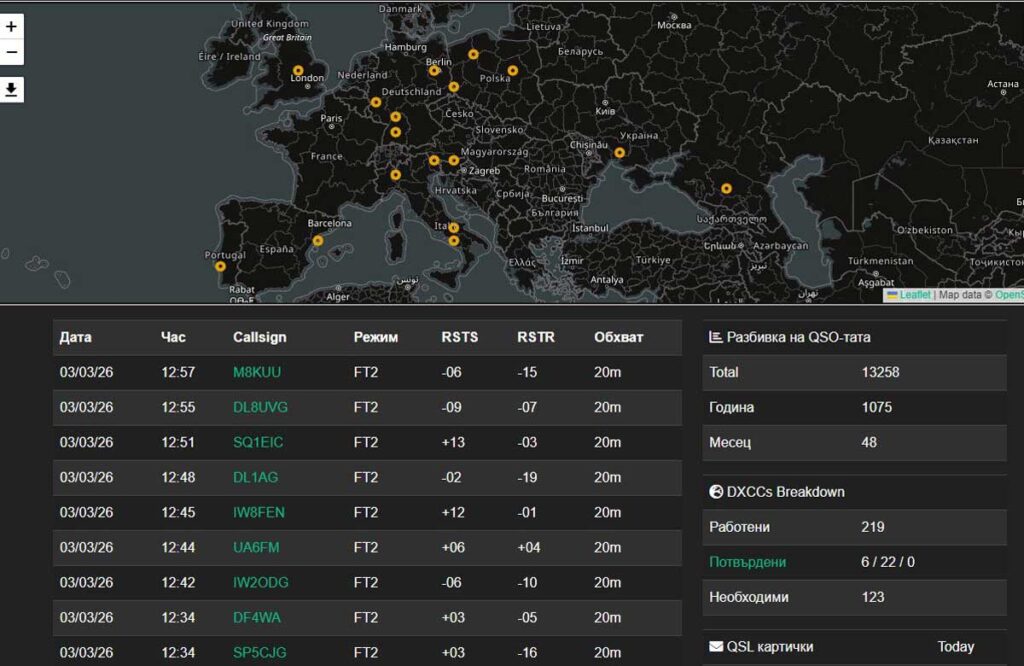
Although the mode is quite new, PSK Reporter filters it correctly under the name FT2. Set Using: FT2 and you will find out where the coupon is now.

Excerpt from LZ3AI's log
Excerpt from LZ3AI’s log
The critical point: Time synchronization

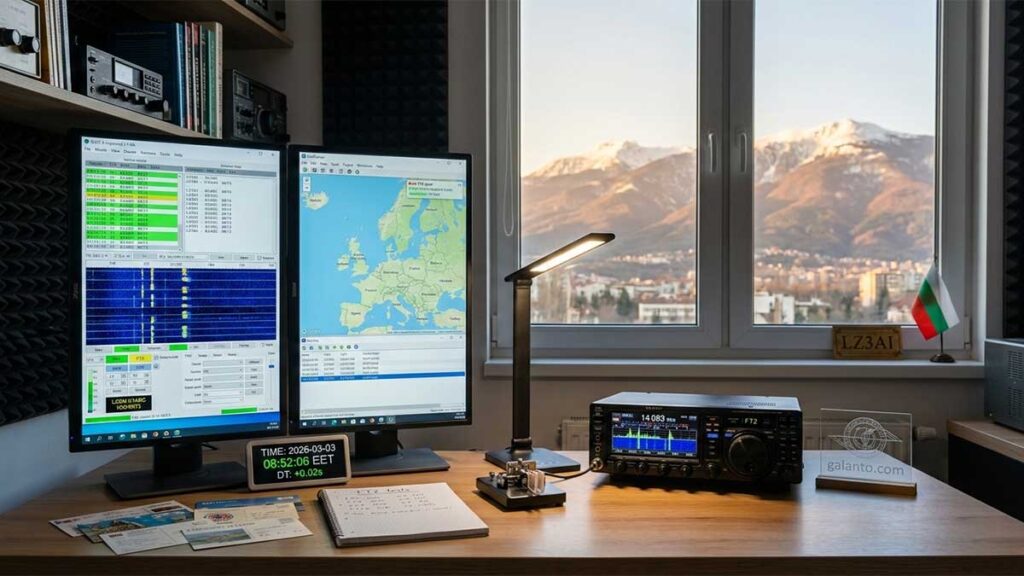
If with FT8 perhaps even a difference of 1 second (DT) is permissible, with FT2 this will make you “deaf” to the air. Due to the extremely short cycle, your computer must be synchronized with an accuracy of ± 50 ms.

Recommendation: The standard Windows synchronization is not enough. Use software like Dimension 4 or NetTime, set to check every 10-15 minutes, or the professional solution Meinberg NTP. I use the free version of NetTime with a synchronization period of 15 minutes (for a shorter period, the full version is required). 15 minutes is a good interval, but if I notice that the DT (Time Difference) in WSJT-X starts to exceed 0.2 – 0.3, I may have to look for an alternative, as much as I don’t want to push something I’m used to.

Alternatives to NetTime: Dimension 4 or Meinberg NTP

If you decide to experiment, many digital mode operators use:

  1. Dimension 4: Completely free, allows synchronization every few minutes and is very lightweight.
  2. Meinberg NTP: This is the “heavy artillery”. It turns your Windows into a true NTP client that maintains the time accurate to milliseconds in real time, without “jumping” at intervals.

Important: If you use NetTime or one of the alternatives, do not forget to completely disable Windows synchronization to avoid conflicts and inaccuracies in synchronization.

Practical Tips for Operating the Yaesu FTDX10 and Other Modern Radios
  1. ALC and Levels: Since switching between receive and transmit is extremely fast, make sure your ALC levels are set to zero. Rapid transitions can generate interference if the audio levels are turned up too high. Adjust the levels so that the ALC needle does not move, so as not to “slap” on neighboring stations in this fast mode.
  2. Split Mode: Be sure to use “Fake It” or “Rig” in the WSJT-X Improved settings (from the Radio settings) to maintain signal purity.
  3. Filter Width: FT2 is wider than FT8 (about 120 Hz vs. 50 Hz). Make sure your radio’s filter in DIGI mode is at least 2400 Hz or 3000-3050 Hz to see the entire waterfall without “clipping” at the edges.
  4. Temperature mode: Your radio will work much harder. Intervals are shorter, but so are breaks. Watch for cooling during longer sessions.
Logbook and Acknowledgements (QSL)

Currently, QRZ.com reports FT2 connections as MFSK mode.

LoTW is still in the process of adding official support. At the moment, it will report your FT2 connections as errors due to the requirement for digital signing with TQSL.

If you use Wavelog, you shouldn’t have any problems.

Since FT2 is not yet officialized, QSL is unlikely to be needed for diplomas or competitions. But if you still want your confirmations to take effect immediately, then in software that does not support FT2, you can export your connections as MFSK or DATA. And hope that your correspondent announces them the same way. So, until the ADIF standard is officially updated – all fans of digital modes hope that this will happen soon.

Conclusion

FT2 is not here to replace FT8, but to give us speed when conditions allow it. This is the ideal mode for contests and “bursts” of radio waves on 10 meters.

Download the latest version of WSJT-X Improved, set your watch and see you on 14.083 MHz!

73 de LZ3AI!

Yaesu FTDX10: Master Class – Complete Setup and Operation Guide (PDF)

Yaesu FTDX10: Master Class – Complete Guide to Setup and Operation

Yaesu FTDX10: Master Class Complete Guide to Setup and operational art (PDF)

If you are a current or former military person, a clarification especially for you – “operational art” is not used here in the sense of the military term 😉

Domestication YourFTDX10: Whytheofficial manual issometimesnotenough?

The Yaesu FTDX10 is undoubtedly one of the best HF transceivers in its class, offering hybrid SDR technology and incredible dynamics. But like any precision instrument, it requires proper adjustment to unleash its full potential. Often, the factory settings are just a starting point. Even if they are perfectly selected, the real magic happens when the operator masters the work with the filters and parameters.

After many hours in front of the scale and experiments in real air conditions, I decided to systematize this experience in a small “book” – a manual that would be accessible to every radio amateur.

What will you find in this manual?

In this publication (and especially in the attached PDF file) we cover critical aspects of transceiver operation that often remain misunderstood:

  • Visual Control: How to use the display (2DSS and 3DSS) to “see” the action of the filters.
  • Clean Receive (RX): A deep dive into the operation of the DNR, DNF, Notch, APFandContour filters. How to “extract” even the weakest signal from atmospheric and other noise.
  • Perfect Audio Transmission (TX): Full settings of the 3- parametric Equalizer (PRMTRC and P-PRMTRC). What is the difference and how to sound punchy in a pileup.
  • CWMastery: CW WAVE SHAPE settings, working in SPLIT mode, and using APF for narrow telegraph filters. Do we need a 300 Hz telegraph filter?
  • Operational Ethics: How to behave in a pileup when we are “hunters” or when we ourselves are the valuable DX station.
The Golden Algorithm of Settings

The manual also includes specific settings recommended by expert radio amateurs who have been working with this transceiver on SSB and CW since its appearance. You will learn why the value of CW WAVE SHAPE is critical for your neighbors on the range and how to properly adjust the voice processor (compressor) without distorting your signal.

“The purpose of this manual is to transform radio operation from a matter of turning knobs into a conscious operational art.”

📥 Download the manual in PDF format

You can download the full version of the book “MASTER CONTROL” ONYAESU FTDX10 completely free from the link below:

👉 [Download PDF: YAESU FTDX10 – Master Class – LZ3AI]

“This guide is my contribution to the amateur radio community and will always be free to share. If the information in it was useful to you and you want to express your support for my work, you can buy me a cup of virtual coffee using the button below. Any such recognition motivates me to continue sharing practical tips and new ones on the site. Thank you and 73!”

Tony, LZ3AI

“Buy me a coffee”

Your feedback is Important for us! Really! Don’t take this sentence as a typical expression from a mobile operator’s telephone exchange.

Amateur radio is a hobby of shared experience. Do you use different settings for your microphone? Do you have a “secret recipe” for the DNR filter when working on 80 meters?

I would be happy to share your opinions, corrections or personal settings in the comments under the articleor with coffee. Let’s make this guide even more useful for the Bulgarian community together!

73 and see you on the air!

Tony, LZ3AI

What is a typical radio telephony connection (FM/SSB/AM QSO)?

What is a typical radio telephony connection (FM/SSB/AM QSO)?
What is a typical telephony radio connection (FM/SSB/AM QSO)?

What is a typical telephony radio connection (FM/SSB/AM QSO)?

First steps on the air of telephony

Do you remember the thrill when you passed the class 2 exam and stood in front of the radio station? Having forgotten about studying for the test, you now have to put everything into practice yourself. Your hand trembles slightly and you don’t dare press the transmit button. Horror! 😉

It may be funny to you now, but you didn’t feel like laughing at all then… Or maybe you’re taking this exact step now? Don’t worry, everything is very easy. This “stage fright” has passed through each of us. What should I do now? Won’t my voice sound stupid? Won’t the old amateurs laugh at me?

Be sure that you will cope! No one will make fun of you – on the contrary, your colleagues will be happy to hear a new person and will help you because they have been through the same path. Amateur radio is like driving – theory gives you the right, but mastery comes with the first kilometers (or the first connections).

Here’s how to get through them confidently.

Stage 1: Preparation – Before you press the PTT button
1. Get to know your equipment

Get to know your radio station’s manual as much as possible. You should feel confident that you know it.

  • The antenna: Connect it carefully. Even if you have a portable one, it is advisable to use an external antenna, mounted as high as possible – on the roof or at least on the balcony. Contact local amateur radio operators – they will certainly help you with advice or installation. Make sure the SWR is within the limits (below 1.5 – 2.0) to protect your transceiver. The “rubber band” (portable antenna) is a compromise only for when you are on the move.
  • Measurement: Set up the external antenna well. The SWR should be as low as possible for the desired frequencies. If you don’t have a meter (SWR meter), the community will help you – this is the “secret” of our hobby.
  • On, off, lock, frequency, power, squelch (noise suppressor):Learn how to set all these things. First, research what is on the air in your area. Set a frequency. Start with low power, especially if you are on a repeater. Set the squelch so that the noise disappears, but does not “cut off” weak signals. Pay attention to whether you need to set a tone to unblock the squelch if you are setting up your radio to work through a repeater. Along with power, read about how your radio locks and unlocks – a useful feature that you may turn on unintentionally.
Step 2: Listen, Record, Learn
Step 2: Listen!

It is extremely bad manners and “lack of manners” to call a frequency without listening to it. Walk around the entire range, listen to how and what others are talking about. Learn to write down the callsigns, names and location (QTH) of the speakers. Choose a frequency, make sure it is in the allowed range for you and that you are not disturbing anyone.

Extremely important rule: Listen for 10 minutes, speak for one.

Stage 3: Conducting a radio call – practical examples
Step 3: Identify yourself and announce your intentions

The big moment has arrived. Introduce yourself clearly and distinctly. Follow what you learned on the exam – spell your initial. Don’t abbreviate it.

  • On simplex (direct): “CQ, CQ, CQ! This is Lima Zulu Three Alpha India (LZ3AI). LZ3AI calls everyone and goes to receive.”
  • On repeater: “LZ3AI on R1. Good evening everyone, how do I get through the repeater?”
Step 4: The Conversation and the “Round Table”

When you are answered, give your rating, name, and location. You may add details about the equipment, antenna, and time. The answer is expected to include the same information.

Working in a Group (Round Table)

If you hear a group of people, wait for a pause and say only your initial. When invited:

  1. Be brief.
  2. Follow the established speaking order.
  3. Always pass the microphone to the next person or to the group leader, if there is one.

Example: “…I’m passing the microphone to Ivan, LZ1XXX. This is LZ3AI and group.”

Signal Rating

The rating varies depending on the method of operation:

  • Through a repeater: The Q1 to Q5 scale (quality rating) is used. Q5 is perfect quality, Q1 is barely intelligible signal.
  • Simplex link (direct): The RS system is used (e.g. 59). The first number (1-5) is for intelligibility, the second (1-9) is for strength. Example: “59” (Five-nine) means a perfect link.
Step 5: International Spelling (Phonetic Alphabet)

To be understood correctly, especially in the presence of noise or interference, use the standard spelling words for the whole world. This is required when pronouncing the initial, name, QTH or other important information during the connection:

Letter Word Letter Word
A Alpha N November
B Bravo O Oscar
C Charlie P Papa
D Delta Q Quebec
E Echo R Romeo
F Foxtrot S Sierra
G Golf T Tango
H Hotel U Uniform
I India V Victor
J Juliet W Whiskey
K Kilo X X-ray
L Lima Y Yankee
M Mike Z Zulu
Step 5: Etiquette and Code of Conduct
  • Identification:Say your initials often enough (every 5-10 minutes), but without being annoying with every line.
  • Forbidden topics: In amateur radio, politics, religion, or race are not discussed, as well as any topics that could potentially cause conflict. Business is not discussed, except for buying and selling amateur radio equipment, although even in these matters, information exchange by phone or email is preferred.
  • Language: In Bulgaria, we speak Bulgarian, but for international relations, English is the standard. Don’t worry about your accent and the mistakes you make – on the air, it’s the information that matters, not the grammar.
Step 6: End the conversation and write in the diary

Wish yourself the traditional 73 (best wishes). End with SK (Full end) or announce that you are quitting work (QRT).

Keep a ham-log! A log is kept during the radio call itself. No matter how soon you have heard everything, due to excitement or something else, you may not remember important things such as initials, name, QTH and after the radio call it may be too late. Write down the initials, frequency, mode, time (UTC), ratings and the name of the correspondent. The log is your story on the air. Most radio amateurs record the time in Greenwich Mean Time (GMT, UTC) to ensure uniformity worldwide. It is a matter of preference whether to record the start, end, start and end, or another time from the radio call itself.

Years ago, there was some decision not to record contacts made via a VHF (VHF or UHF) repeater. I suspect that some colleagues also do not record contacts that have developed into a “talking room” on any number of issues, but I think that at least on HF, everyone is recorded. This is somewhat a personal choice, but good practice requires that everything be recorded in the logbook. Let’s not forget that the entries in the logbook may even turn out to be important evidence in some legal proceedings or may even have historical significance.

Concluding remarks

The essence of radio amateurism is in social contacts. Join a local club – getting to know the people you talk to “in person” changes everything. Respect the traditions of the community and be respectful.

💬 TOP 10 Amateur Radio Abbreviations (Q-codes and others)

These short codes help for faster and more accurate communication.

  1. QTH – Location of the station (e.g. “My QTH is Sofia”).
  2. QSL – Confirmation of the connection or information (“QSL, I got it all”).
  3. QRM – Artificial interference from other stations or electrical devices.
  4. QSB – Signal attenuation (common in HF links).
  5. QRZ? – “Who’s calling me?” (used when you hear someone but don’t understand their initials).
  6. QRT – I’m quitting, I’m turning off the station.
  7. QSO – Radio contact (e.g. “Thanks for the nice QSO”).
  8. 73 – Best wishes (traditional ending of any contact).
  9. DX – Distant station (usually outside your continent).
  10. CQ (C-Q) – General call to all (“Calling all stations”).
📢 Question to readers:

Do you remember your first radio contact and who was your first “teacher” on the air? Share your story in the comments – it could be the inspiration a new colleague needs right now!

73 and see you on the air!